


Types of Wire Feeding Systems in Mesh Welding Machines

Types of Wire Feeding Systems in Mesh Welding Machines
and Their Impact on Production Speed and Quality
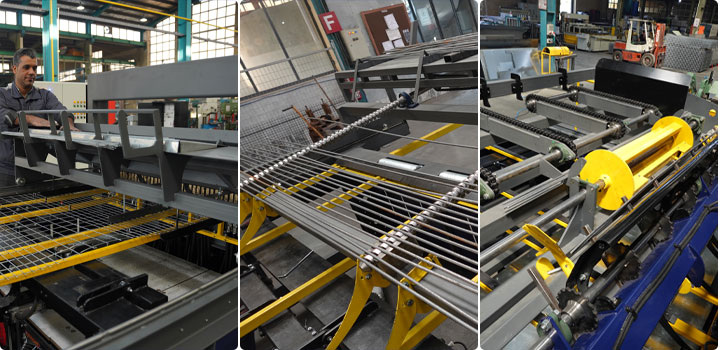
In welded mesh machines, the wire feeding system is one of the key components of the production line. Its primary function is to feed and guide straight wire lengths to the welding portal. The type of wire feeder can affect production speed, machine operating accuracy, the quality of the finished mesh, and the level of operator involvement. Therefore, selecting the right wire feeding system should be based on the type of product, the diameter of the wire used, the quality of the straightened wire lengths, and the required production capacity.
Wire feeding systems used in are generally available in three main types: **fully automatic, semi-automatic auger-type, and semi-automatic cassette-type wire feeders**. Each type is designed for specific operating conditions and differs in terms of production speed, cost, required wire quality, and operating mechanism.
1. Automatic Wire Feeding System
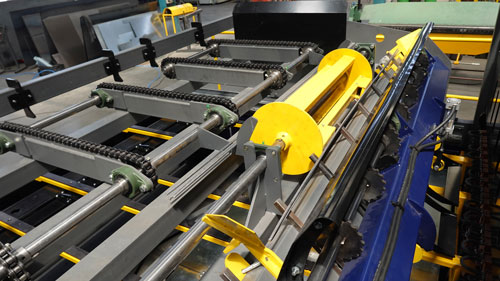
The automatic wire feeding system is designed for production lines where high speed, reduced operator involvement, and increased productivity are essential. In this model, the wire feeding process is fully automated, minimizing the need for continuous manual preparation and guidance of the wires by the operator.
This system is suitable for wires with good material quality, proper straightness, and minimal curvature. Within the machine's design specifications, it can handle wires with diameters ranging from approximately 4 to 10 mm. However, the actual supported diameter range depends on the technical specifications of each machine model.
The main advantage of an automatic wire feeder is its higher production speed and reduced downtime caused by manual operator intervention. This makes it particularly beneficial for mass production lines, helping increase overall efficiency and maximize machine capacity.
On the other hand, the initial investment cost of this model is generally higher than that of the other two types. In addition, the quality and consistency of the wire lengths are particularly important, as wires with severe bends or irregular shapes may interfere with the feeding system's performance.
Applications of Automatic Wire Feeding Systems:
- Mass production of various types of industrial welded mesh
- Production of construction reinforcement mesh
- High-capacity production lines
- Factories requiring a higher level of automation and reduced operator involvement
2. Semi-Automatic Cassette-Type Wire Feeding System
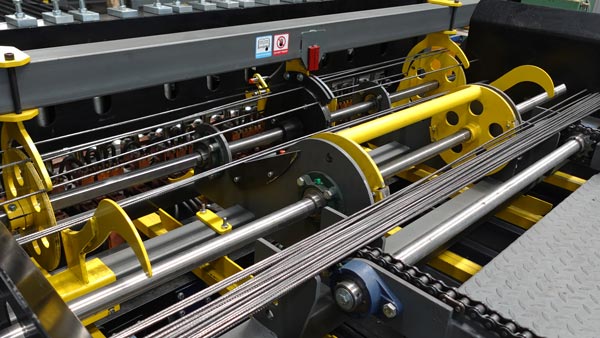
The semi-automatic cassette-type wire feeding system is designed to ensure the orderly feeding of straight wire lengths. In this model, the operator loads the cassette with the required wires, and the machine performs the feeding process according to its designed mechanism.
This wire feeder is generally suitable for wires with diameters ranging from approximately 2 to 5 mm. It delivers optimal performance when the wire lengths have good straightness and minimal curvature. Consistency in wire shape helps ensure smoother feeding and maintain accuracy throughout the production process.
In terms of cost, the cassette-type wire feeder is generally a more economical option than the fully automatic model. However, since the cassette must be loaded manually by the operator, its level of automation is lower, and production speed depends on the line's operating conditions and the time required to prepare and reload the cassette.
Applications of Cassette-Type Wire Feeding Systems:
- Production of welded mesh using thinner wires
- Manufacturing of wire mesh fences and railings
- Production of mesh cable trays and similar products
- Production lines where orderly wire feeding and proper process control are important
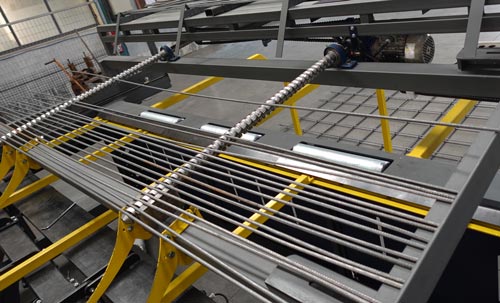
3. Semi-Automatic Auger-Type Wire Feeding System
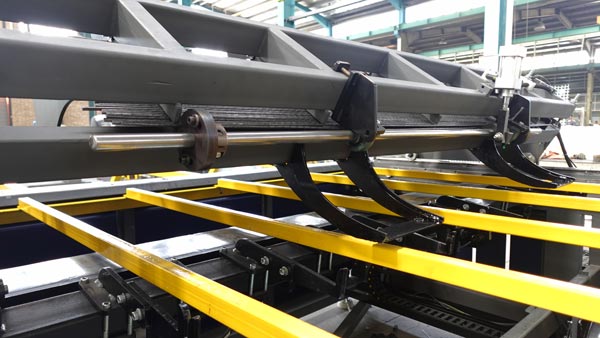
The semi-automatic auger-type wire feeding system is an economical option for welded mesh machines. In this system, the operator places the wire lengths into the auger mechanism and supervises the feeding process. This model is suitable for production lines where very high speed is not the main priority, or where the straightened wire lengths do not have completely consistent straightness and curvature characteristics.
One of the main advantages of this model is its lower cost compared to the fully automatic wire feeding system. In addition, within the machine's design specifications, it can handle wires with diameters ranging from approximately 4 to 10 mm.
However, the operating speed of an auger-type wire feeder is generally lower than that of an automatic model, and loading the auger requires operator involvement. Therefore, when selecting this system, it is important to consider not only the initial investment cost but also the time required for wire feeding and the overall production capacity of the line.
Applications of Auger-Type Wire Feeding Systems:
- Production of BRC welded mesh
- Production of various types of welded mesh on medium- or low-speed production lines
- Manufacturing mesh used in precast concrete walls
- Production lines requiring flexibility in handling different straight wire lengths
Comparison of Wire Feeding Systems in Mesh Welding Machines
The following table highlights the main differences between the three wire feeding systems in terms of their specifications, performance, and applications.
Feature | Semi-Automatic Auger-Type | Semi-Automatic Cassette-Type | Fully Automatic |
Automation Level | Semi-automatic | Semi-automatic | Fully automatic |
Required Wire Quality | Acceptable straightness and curvature, with greater tolerance for wire irregularities | Good straightness and minimal curvature | Good straightness and minimal curvature |
Approximate Wire Diameter | 4–10 mm | 2–5 mm | 4–10 mm |
Operating Speed | Lower than the automatic model | Lower than the automatic model | High |
Operator Involvement | Loading the auger and monitoring the process | Loading the cassette and monitoring the process | Minimal involvement during normal feeding operations |
Initial Investment | More economical than the automatic model | More economical than the automatic model | Higher than the other two models |
Suitable Production Lines | BRC mesh and precast concrete wall production | Fence and mesh cable tray production | Mass production of industrial and construction mesh |
*Note: The wire diameter ranges listed above are approximate and based on the specifications provided for these models. The actual supported wire diameter, compatibility with ribbed or non-standard cross-section wires, and production speed should be verified against the technical specifications of the selected machine.*
What to Consider When Choosing a Wire Feeding System
To select the right wire feeding system for your mesh welding machine, several key factors should be taken into consideration:
1. Wire Diameter:
Each wire feeding system is designed to handle a specific range of wire diameters. The selected model should be compatible with the actual wire diameters used in your production line.
2. Wire Straightness and Quality:
Wire straightness and the degree of curvature can directly affect the performance of the feeding system. If the wires used in production have inconsistent quality, their compatibility with the selected wire feeder should be carefully evaluated.
3. Production Capacity and Speed:
If the main objective is mass production and minimizing production line downtime, a fully automatic wire feeding system may be the better choice. For production lines with lower capacity requirements, semi-automatic models may also provide a suitable solution.
4. Initial Investment and Operating Costs:
The purchase price of the machine is not the only factor to consider. The time required for wire preparation, the level of operator involvement, and production downtime also affect the final manufacturing cost.
5. Type of Finished Product:
Different products, such as construction reinforcement mesh, wire railings and fences, mesh cable trays, BRC mesh, and industrial welded mesh, may have different requirements in terms of wire diameter and production capacity.
Conclusion
Choosing the right wire feeding system for a mesh welding machine depends on several factors, including the quality of the wire used, wire diameter, required production speed, and type of finished product. The semi-automatic auger-type wire feeder is an economical option for a wider range of operating conditions. The semi-automatic cassette-type model is suitable for thinner, straight wires, while the fully automatic wire feeding system offers greater advantages for high-speed, mass-production lines.
Ultimately, selecting the right wire feeding system can help ensure more consistent wire feeding, reduce production downtime, improve machine capacity utilization, and increase overall production line efficiency. Before making a decision, it is recommended to compare the technical specifications of each model with the actual production requirements and the type of wire being used.