


Welded Mesh Production Line Setup Cost & Equipment

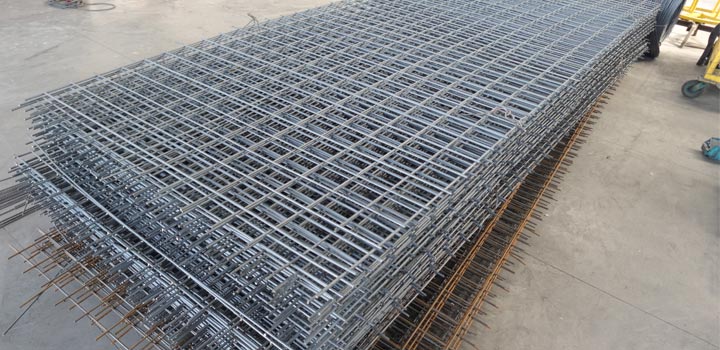
Welded Mesh Production Line Setup Cost & Equipment
If you are planning to establish a manufacturing facility for welded mesh, steel mesh, or BRC mesh, your first question is probably: How much investment is required to set up a welded mesh production line?
The reality is that the cost of setting up a welded mesh production line varies from project to project, and there is no fixed figure that applies to every operation. Factors such as machine type, production capacity, wire diameter, mesh dimensions and aperture size, raw material quality, level of automation, auxiliary equipment, machinery prices, required facility space, and wire supply method all play a role in determining the initial investment and startup costs.
In this article, we will examine the equipment required to set up a welded mesh production line and the major costs involved in this investment.
What Does the Cost of Setting Up a Welded Mesh Production Line Include?
In general, the investment required to set up a welded mesh production line can be divided into several main categories:

Mesh Welding Machine

Wire Preparation Machines

Auxiliary Equipment and Material Handling

Workshop Preparation and Industrial Electrical Installation

Human Resources (HR)

Transportation, Installation, and Commissioning

Administrative Costs and Permits
However, not all of this equipment is essential from day one for every project. Equipment selection should be based on the final product and the desired production capacity.
1. Cost of Purchasing a Welded Mesh Welding Machine
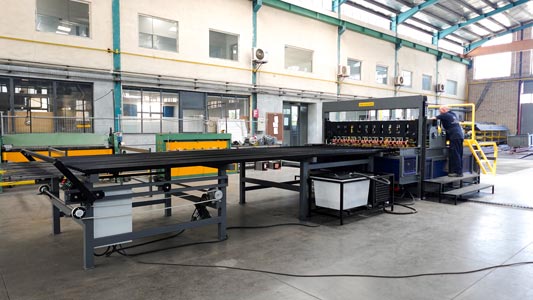
The most significant investment in a welded mesh production line is the mesh welding machine. Its price depends on its technical specifications and available features. Factors such as the wire diameter range, mesh width, mesh aperture size, production speed, welding mechanism, and machine control system can all affect the final cost.
Sepehr Machinery’s mesh welding machines are designed and manufactured on a customized basis. Therefore, each production line is built according to the customer’s specific requirements, production capacity, and desired specifications. As a result, machine configurations may vary from one project to another.
What Should You Consider When Purchasing a Mesh Welding Machine?
The purchase price should not be the only factor in your decision. It is also important to evaluate the following aspects:
- Actual Production Capacity of a Mesh Welding Machine
- Supported wire diameter range
- Maximum mesh width
- Mesh aperture dimensions
- Energy consumption
- Machine control system
- Availability of spare parts
- Installation and operator training services
- After-sales support
For example, a lower-priced machine may initially seem like an attractive option. However, if it has a lower production speed, frequent downtime, high maintenance costs, or limited technical support and after-sales service, it may result in higher expenses over the long term.
Production line downtime caused by delays in spare parts supply, inadequate technical support, or lengthy repair times can reduce productivity and lead to lost production opportunities, in addition to increasing repair costs.
2. Do You Need Wire Preparation Machines for Welded Mesh Production?
Depending on how you source your raw materials, you may also need a wire straightening and cutting machine. If you purchase steel wire in coils, a wire straightening and cutting machine can straighten the wire and cut it to specified lengths, preparing it for the mesh production process. This is particularly important for manufacturers who want to handle wire preparation in-house.
Some manufacturers, however, choose to purchase straightened wire in bars to reduce raw material costs, as straight wire bars can often be less expensive than wire supplied in coils. Nevertheless, handling long wire bars (typically 12 meters) requires more labor, time, and space for transportation, cutting, and preparation. Manual handling and preparation can also increase material waste and reduce productivity, potentially offsetting some of the initial savings on purchase costs.
At Sepehr Machinery, wire straightening and cutting machines are designed in various models to accommodate different wire diameters. The appropriate model is selected based on the wire diameter and required production capacity.
Therefore, when calculating the investment required for a welded mesh production line, one key question must be answered: Will you purchase straightened wire bars ready for production, or will wire preparation also be carried out in-house?

3. Is a Wire Drawing and Ribbing Line Necessary for Welded Mesh Production?
A wire drawing line is not always necessary. If you can purchase wire in the required diameter from a supplier, you can produce welded mesh without installing your own wire drawing line.
However, some industrial manufacturers prefer to carry out wire preparation in-house. In such cases, a wire drawing and ribbing line can become part of the production facility. This approach offers greater control over wire quality and specifications, enables the production of required wire sizes, and reduces dependence on external suppliers. On the other hand, it increases the initial investment, space requirements, equipment needs, and overall complexity of the production line.
In many markets, ribbed wire in larger diameters, such as 8 mm and above, is generally easier to source. However, the availability of smaller-diameter ribbed wire, such as 4, 5, 6, or 7 mm, may be more limited, particularly for welded mesh applications that require these specific sizes.
In such cases, installing a wire drawing and ribbing line can help manufacturers produce wire in-house according to their required diameter, quality, and specifications.

Therefore, before investing in a wire drawing line, it is advisable to conduct a cost-benefit analysis to determine whether producing wire in-house offers greater economic advantages than purchasing ready-made wire from suppliers.
4. Workshop Preparation and Industrial Electrical Installation Costs
Another important component of the cost of setting up a welded mesh production line is preparing the facility for machine installation. The required workshop space depends on the number of machines, production line dimensions, material handling methods, and production capacity. In addition to the machine installation area, sufficient space must be allocated for the following:
- Storage and staging of incoming wire coils
- Raw material delivery and feeding routes
- Mesh unloading and packaging areas
- Machine maintenance and servicing
- Material handling equipment movement
- Operator workspaces
The production capacity of the mesh welding machine also directly affects the required workshop space. For example, a mesh welding machine with an output of approximately 10–15 tons over two shifts requires a considerable volume of wire to maintain continuous production. This means that around 20–30 tons of wire may need to be available within the production and inventory cycle, requiring adequate storage and handling space.
The finished product, welded mesh, also occupies considerable space due to its dimensions and weight. However, auxiliary equipment such as a mesh sheet turning device can improve the management of the discharge area and reduce the space required for stacking finished mesh sheets.
In addition to the main mesh welding machine, various auxiliary devices can be incorporated into the production line according to the customer’s requirements. Although these devices improve productivity and simplify operation, their installation and operating space must be considered when designing the workshop layout. Examples include:
- Wire Injection Table: Helps organize the feeding of longitudinal wires into the machine, improving feeding efficiency and workflow.
- Mesh Discharge Chute: Guides finished mesh sheets out of the machine and improves the product discharge process.
- Mesh Sheet Turning Device: Facilitates the handling and arrangement of finished mesh sheets while reducing the space required for stacking.
These auxiliary devices are custom-designed and manufactured according to each customer’s requirements. Therefore, when estimating the space needed for a production line, it is important to account for both the main mesh welding machine and the installation and operating areas of all auxiliary equipment.
Material handling equipment must also be considered during workshop planning. Given the substantial weight of wire coils and mesh sheets, a forklift is often needed to move raw materials and finished products. In addition, an overhead crane with a capacity of approximately 3 tons can be essential in many production facilities for machine installation, equipment handling, and maintenance.
Industrial Electrical Installation
The resistance welding system of a mesh welding machine requires an adequate electrical infrastructure. Before purchasing the machine, the required electrical capacity, distribution panel, cabling, and other electrical components should be assessed.
A common mistake is to purchase the machine first and only later discover that the workshop’s existing electrical infrastructure is insufficient to operate it properly. Evaluating electrical requirements in advance helps avoid unexpected expenses, installation delays, and operational problems.
5. How Many Workers Are Needed for a Welded Mesh Production Line?
The number of workers required depends on the machine type and the level of automation in the production line. In automated lines, many production processes are managed by the machine’s control system, allowing manufacturers to operate with fewer workers than simpler production setups. However, trained personnel remain essential for efficient operation.
Operators should be able to:
- Set up and adjust the machine
- Monitor mesh quality
- Identify common operational issues
- Manage raw materials
- Perform basic machine maintenance
Ease of operation and effective training directly influence how quickly operators learn to use the equipment and how efficiently the production line operates. Therefore, when selecting machinery, manufacturers should consider more than just technical specifications and production capacity. Factors such as ease of operation, operator training, access to technical services, and after-sales support are also important.
Sepehr Machinery aims to make production line installation and operation easier for manufacturers by designing user-friendly mesh welding machines, providing the necessary operator training, and offering ongoing after-sales support.
Therefore, when selecting a machine, it is advisable to look beyond the number of operators required. You should also evaluate production capacity per worker, machine operating complexity, and the manufacturer’s support after installation.
7. Transportation, Installation, and Training Costs
Transportation of the machine to the factory, installation, commissioning, and operator training should also be included in the project’s financial plan. These costs depend on factors such as the factory’s location, the number of machines, equipment dimensions, and installation requirements.
When purchasing a machine, it is advisable to clarify whether the following services are included in the sales contract or charged separately:
- Machine transportation
- Installation
- Commissioning
- Operator training
- Production testing
- After-sales service
Choosing a manufacturer that provides reliable technical assistance and effective training can help reduce production downtime and minimize problems during the installation and commissioning process.
How to Reduce the Cost of Setting Up a Welded Mesh Production Line?
Reducing costs does not necessarily mean choosing a cheaper machine. The primary goal should be to lower production costs and improve the return on investment.
Choose the Machine Capacity Based on Market Demand
If your target market has limited demand, investing in a high-capacity machine may tie up capital unnecessarily. On the other hand, if you have strong sales opportunities, a low-capacity machine could limit your business growth.
Phase Your Equipment Purchases
You do not always need to purchase all the equipment at the same time as the main machine. For example, if you purchase ready-to-use wire during the initial phase, you may not need to invest in a wire drawing line.
Pay Attention to After-Sales Service
Production downtime can result in significant costs for an industrial facility. Therefore, access to spare parts, repair services, and technical support should be among the key criteria when selecting a machine manufacturer.
Consider Future Expansion Potential
If production is expected to increase in the future, it is advisable to select machinery and design the production line layout in a way that allows for future expansion or the addition of equipment in later stages.
Is Setting Up a Welded Mesh Production Line Profitable?
The profitability of a welded mesh production line depends on several factors, including raw material prices, mesh selling prices, production capacity, machine utilization rate, energy costs, labor, maintenance expenses, and market demand.
Therefore, it is not possible to determine a fixed profit margin for all manufacturing facilities without evaluating market conditions and project-specific costs.
Before investing, it is important to consider not only the cost of purchasing the machine but also the potential sales market and the final production cost of the mesh.
What Information Should You Have Before Purchasing a Mesh Welding Machine?
- Required Mesh Type
- Daily or Monthly Production Volume
- Required Production Capacity
- Wire Supply Method
- Mesh Opening Size
- Workshop Electrical Capacity
- Mesh Width
- Installation Location
- Wire Diameter
- Target Market Type
With this information available, the mesh welding machine and auxiliary equipment can be selected to meet the project's actual requirements.
Conclusion
Setting up a welded mesh production line involves several investment components, and the total cost goes beyond purchasing the mesh welding machine alone.
The **mesh welding machine, wire straightening and cutting machine, wire drawing and ribbing line (if required), workshop preparation, industrial electrical installation, raw materials, labor, transportation, installation, and working capital** are the main components of this investment. The best way to reduce risk and improve productivity is to select equipment based on the **final product, production capacity, operating conditions, and target market**, ensuring that the production line is designed to meet the project's technical and economic requirements.
With more than **25 years of experience in designing and manufacturing machinery for the wire and welded mesh industries**, Sepehr Machinery specializes in the production of **mesh welding machines, wire straightening and cutting machines, and wire drawing lines**.
If you are planning to establish a welded mesh production line, you can discuss your project specifications and desired production capacity with the Sepehr Machinery team. Their specialists can assess your requirements and recommend suitable equipment tailored to your project's needs.