


Welded Wire Mesh Applications in Construction Projects


Welded Wire Mesh Applications in Construction Projects
Welded wire mesh is one of the most widely used steel products in the construction industry. Its uniform mesh openings, dimensional accuracy, fast installation, adequate strength, and potential to reduce rebar consumption have made it an important reinforcement solution for a wide range of construction projects. During the manufacturing process, steel wires are arranged longitudinally and transversely at specified intervals and joined at their intersections using resistance spot welding.
In many construction projects, welded wire mesh can replace part of traditional rebar reinforcement. It can significantly reduce installation time while improving the quality, consistency, and uniformity of the reinforcement network. For this reason, understanding the applications and advantages of welded wire mesh is important for engineers, contractors, and professionals working in the construction industry.
What Is Welded Wire Mesh?
Welded wire mesh is a steel reinforcement product made from steel wires arranged longitudinally and transversely at specified intervals and welded together at their intersections. This process creates a uniform, strong, and stable steel mesh.
Unlike traditional rebar reinforcement, where reinforcing bars are cut, bent, positioned, and tied together on site, welded wire mesh is manufactured in a factory using specialized machinery and precision equipment. As a result, wire spacing and mesh dimensions can be controlled more accurately and consistently.
Welded wire mesh can be manufactured in different dimensions, wire diameters, and mesh opening sizes. The appropriate type is selected based on the structural design, applied loads, and specific requirements of the project.
Key Applications of Welded Wire Mesh in the Construction Industry

Concrete Reinforcement
One of the primary applications of welded wire mesh is reinforcing concrete. While concrete performs very well under compression, its tensile strength is relatively limited. Placing a steel reinforcement mesh within concrete helps improve tensile strength and control cracking.
By providing a uniform steel grid within the concrete, welded wire mesh helps distribute stresses more effectively and can be used in the construction of various concrete elements and structures.
Welded wire mesh is commonly used in concrete floors, slabs, walls, and precast concrete elements. Its use helps control cracking while improving the strength, structural integrity, and durability of these components.
Reinforcement of Concrete Slabs
Welded wire mesh is widely used in various parts of concrete structures, including concrete floor slabs. In traditional reinforcement methods, individual rebars must be positioned at specified intervals on site and tied together using rebar tying wire. This process is time-consuming and requires a significant amount of labor.
Using welded wire mesh allows the reinforcement grid to be prefabricated, making installation faster and more efficient. The uniform spacing between the wires also helps ensure a more organized and precise reinforcement layout.
However, the wire diameter, mesh opening size, and placement of the welded wire mesh should always be determined according to the structural drawings and technical specifications of the project.
Industrial and Concrete Floor Construction
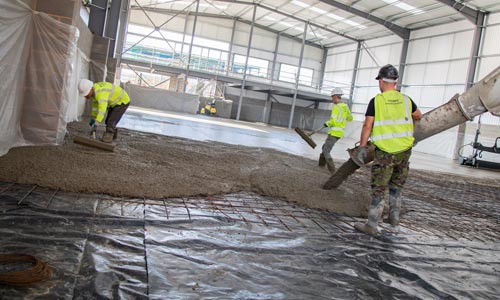
Another important application of welded wire mesh is in concrete floors. Concrete floors in factories, warehouses, parking garages, and industrial buildings are continuously exposed to the weight of equipment, machinery, vehicles, and other operational loads. In addition, temperature changes and concrete shrinkage can lead to cracking.
Placing a steel reinforcement mesh within the concrete can help control cracks caused by shrinkage and temperature variations. In projects involving large concrete floor areas, using welded wire mesh can also speed up the preparation and installation of the reinforcement, resulting in a more efficient construction process.
Construction of Concrete Walls
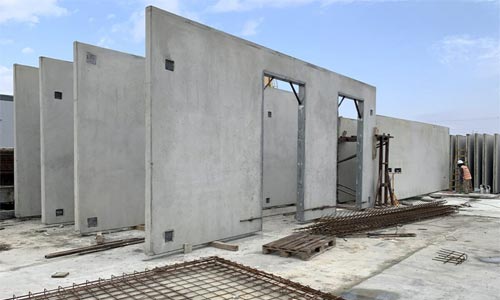
Welded wire mesh is used in the construction of various concrete and reinforced concrete walls. Placing the steel mesh within the concrete helps control cracking and improves the strength and structural integrity of the wall.
In projects where a large number of similar walls or precast concrete elements need to be constructed, using prefabricated welded wire mesh can simplify and accelerate the reinforcement preparation and installation process.
Production of Precast Concrete Elements
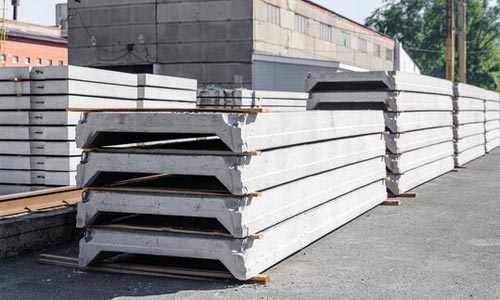
The precast concrete industry is another important area where welded wire mesh is widely used. Products such as concrete panels, certain types of precast walls, flooring elements, and other precast concrete products can incorporate welded wire mesh to improve strength and help control cracking.
One of the key advantages of welded wire mesh in this application is its ability to provide uniform and repeatable reinforcement grids. This is particularly important for precast concrete manufacturers that produce large quantities of identical or similar components on a daily basis.
Foundation and Footing Construction
In certain structural systems and construction projects, steel reinforcement meshes are used in parts of the building foundation and footings. Welded wire mesh can be used as a prefabricated reinforcement grid for these applications; however, its type, size, and placement must be determined based on the structural design and calculations provided by a qualified structural engineer.
Using prefabricated reinforcement mesh can speed up the process of positioning and securing reinforcement compared with assembling the entire reinforcement grid manually on site.


Production of Wire Mesh Panels and 3D Wall Panels
Another important application of welded wire mesh in the construction industry is the production of wire mesh wall systems and 3D wall panels. In these products, welded steel mesh serves as the primary reinforcement component of the system.
3D wall panels typically consist of welded steel wire mesh combined with an insulating core. They are used in certain construction systems to build lightweight, insulated walls with an efficient and practical construction method.
Benefits of Using Welded Wire Mesh in Construction
Compared with many traditional rebar reinforcement methods, welded wire mesh offers several important advantages in construction projects.
Faster Installation: Welded wire mesh is prefabricated and can be installed directly at the construction site. This significantly reduces the time required to position and tie large quantities of reinforcing bars.
Greater Accuracy in Reinforcement Spacing: During industrial production, wire spacing is precisely controlled by the welding machine, resulting in a more uniform and consistent reinforcement grid.
Reduced Rebar Installation Work: Traditional reinforcement requires considerable time for cutting, positioning, and tying reinforcing bars. Welded wire mesh eliminates or simplifies a significant part of these operations.
Reduced Labor Requirements: Since the reinforcement mesh is prefabricated, fewer manual operations are required at the construction site, which can help reduce labor requirements.
Improved Mesh Integrity: Welded intersections help keep the wires securely in position, providing greater stability compared with reinforcement grids that are assembled and held together solely with tying wire.
Better Manufacturing Quality Control: Industrial production allows for more precise control of wire diameter, mesh opening size, overall dimensions, and weld quality, resulting in a more consistent reinforcement product.
Welded Wire Mesh vs. Traditional Rebar Reinforcement
In traditional rebar reinforcement, reinforcing bars are typically cut, positioned, and tied together on site using rebar tying wire. This method offers a high degree of flexibility, but it generally requires more time and labor for installation.
In contrast, welded wire mesh is a prefabricated reinforcement grid manufactured in a controlled factory environment. As a result, it can be installed more quickly, while maintaining more consistent and accurate reinforcement spacing.
However, welded wire mesh is not a universal replacement for all traditional reinforcement methods. The appropriate reinforcement solution should be determined for each project based on structural drawings, engineering calculations, applicable building codes, and site conditions.
The Role of Mesh Welding Machines in Welded Wire Mesh Production
The quality of welded wire mesh depends largely on the quality and precision of the equipment used in its production. A mesh welding machine is responsible for feeding the wires, setting the mesh spacing, welding the wire intersections, and producing the finished mesh.
Modern mesh welding machines use PLC and HMI control systems to provide precise monitoring and control of the production process. Depending on the machine type, welding technology, and wire diameter, different types of welded wire mesh can be produced for construction and industrial applications.
Accurate control of mesh opening dimensions, weld quality, production speed, and material waste are among the key factors that affect the efficiency and cost-effectiveness of welded wire mesh production.
Conclusion
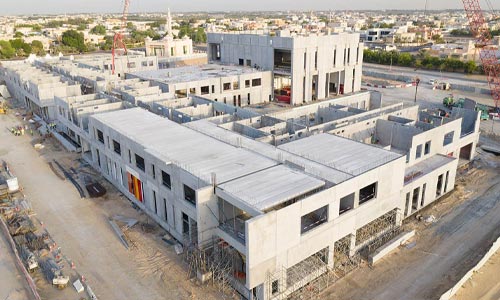
Welded wire mesh has become an important reinforcement product in the construction industry due to its fast installation, uniform mesh opening spacing, dimensional accuracy, reduced manual work, and suitability for industrial production. From concrete reinforcement and slab construction to industrial floors, concrete walls, precast concrete elements, and 3D wall panels, welded wire mesh can play an important role in improving the speed, consistency, and efficiency of construction operations.
However, the appropriate mesh type, wire diameter, and mesh opening size should be selected based on the technical requirements and structural design of each project. Manufacturing quality, particularly weld quality at the intersections, uniform mesh spacing, and dimensional accuracy, also has a direct impact on the performance of the final product.
As industrialized construction methods continue to develop and speed and productivity become increasingly important in construction projects, modern welded wire mesh production equipment is becoming more essential. By using precise and automated mesh welding machines, manufacturers can produce high-quality welded wire mesh with consistent properties and controlled specifications, helping meet the growing demands of the construction industry.